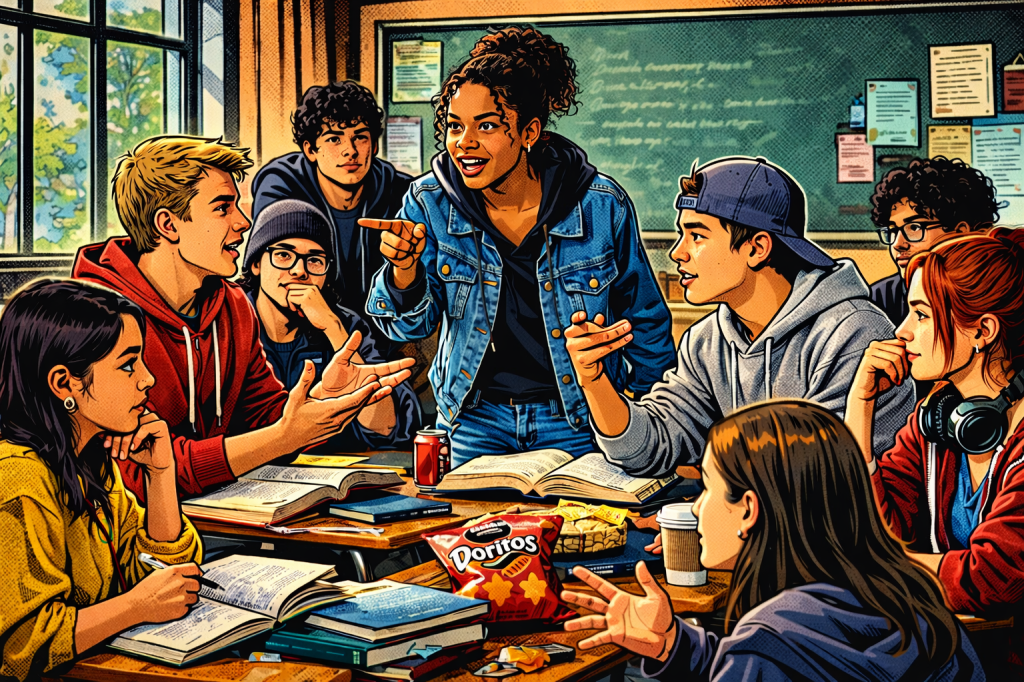
I should confess something up front: I don’t have a teenager. I don’t have to negotiate curfews, decode cryptic text messages, or coax a sleepy adolescent out of bed on Saturday mornings. But I do spend my days surrounded by teens, and teaching them has become one of the best windows into what it means to grow up right now.
From my vantage point as the adult at the whiteboard, I get to witness the contradictions that make adolescence so wonderfully complicated. Teenagers are confident and uncertain, bold and fragile, goofy and philosophical — often in the same five-minute span. They can debate foreign policy with the intensity of seasoned pundits and then immediately ask whether there is a snack.
Because I’m not their parent, my relationship with teens is more easily maneuvered. I am close enough to see their worries, but far enough away that they can roll their eyes freely without collapsing the entire household ecosystem. Sometimes I think that teaching teens is like being a translator: I help them articulate what they’re thinking into adult, and I try to explain the adult world back to them without ruining the magic.
What I admire most is how fiercely they are constructing their identities — who they are, what they care about, and what kind of adult they want to become. It’s messy work. It comes with strong opinions, sudden silences, and a lot of hoodies. But it’s also hopeful work. They care deeply about fairness. They pay attention. They notice hypocrisy instantly. And while they may not always say thank you out loud, they remember the adults who treated them seriously.
Parents sometimes ask me for insider advice on “what’s going on in their teen’s head.” I wish I could offer a tidy recipe, but the truth is, there isn’t one — and teens would be insulted if there were. What I can say is this: your teen needs you more than their cool exterior suggests. They need guidance like bumper rails in a bowling alley — firm enough to keep them out of the gutters, flexible enough to let them throw the ball their way.
From the classroom side, I see the quiet moments parents rarely get to witness: the kid who shares their lunch with a friend, the one who finally understands a concept they’ve been wrestling with, the one who volunteers to help without being asked. Those tiny acts remind me that adolescence is not just a phase to survive; it’s the construction zone where the scaffolding of adulthood gets built.
I may not have a teenager at home, but thanks to my students, I have a front-row seat to some of the most astonishing growing-up humans on the planet. And if you’re raising one — take heart. The chaos has a purpose.
 Middle and High School Montessori Education
Leave a comment